Gross Motor Skills (4S Assessment)
What is it?
The 4S Assessment (also known as the 4S Test) measures the gross motor development of children across four skills: Jumping-power (locomotion), Bouncing (object manipulation), Standing still (balance) and Jumping-coordination. For each skill, the child performs exercises with increasing difficulty, linked to age levels. The assessment has been scientifically validated by the School of Movement Sciences at the Amsterdam University of Applied Sciences and was developed in collaboration with Wim van Gelder and Hans Stroes.
Why does this matter?
Gross motor skills are the foundation of all movement. Walking, running, jumping, climbing, cycling, swimming: these are skills children need to develop and participate, both in school and beyond. Strong gross motor skills also form the basis for other areas of development. Children who are strong in gross motor skills move with more confidence, participate more easily in sports and play, and enjoy physical activity more.
What are the risks of falling behind?
Children with gross motor delays are often picked last in sports, withdraw from physical activities and develop less enjoyment in movement. This leads to less physical activity, which further widens the gap. Over time, this can result in an inactive lifestyle, overweight, reduced self-confidence and social exclusion in sports and play. The longer a delay goes unnoticed, the harder it becomes to close.
What does it deliver?
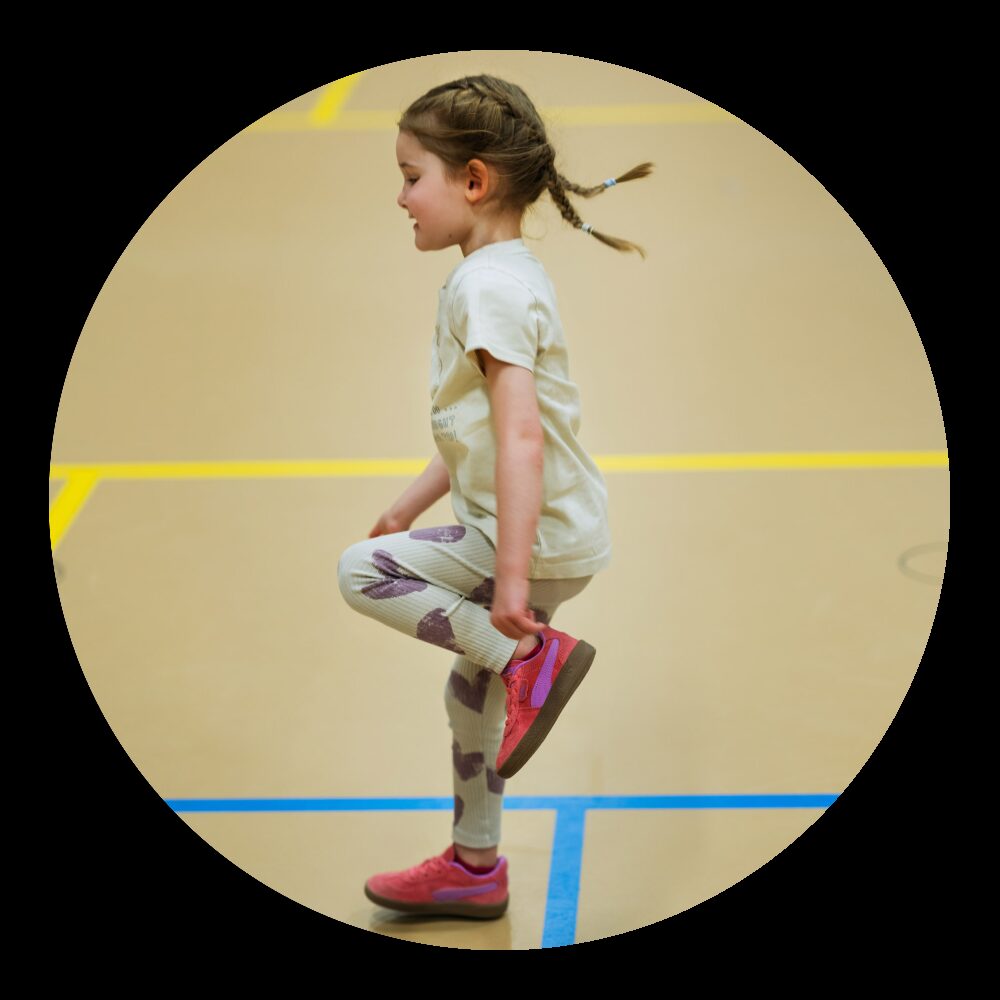
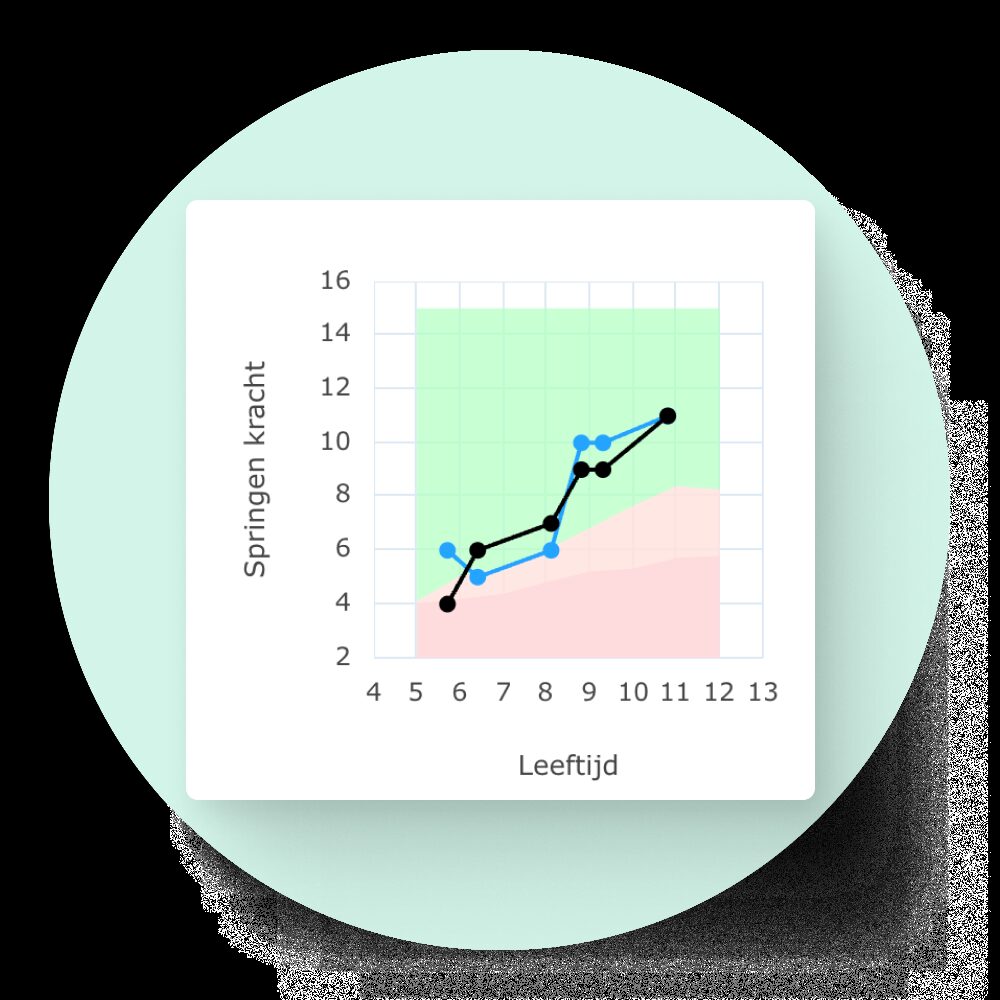
Per child, a score on each of the four skills, plus a care indication that flags a possible delay. At group and school level, you can immediately see which children need extra attention. With just the hopping test (jumping-power) alone, you can get a reliable first picture of an entire class within a single lesson. From there, you go deeper where needed with the remaining components.
Connections worth noting
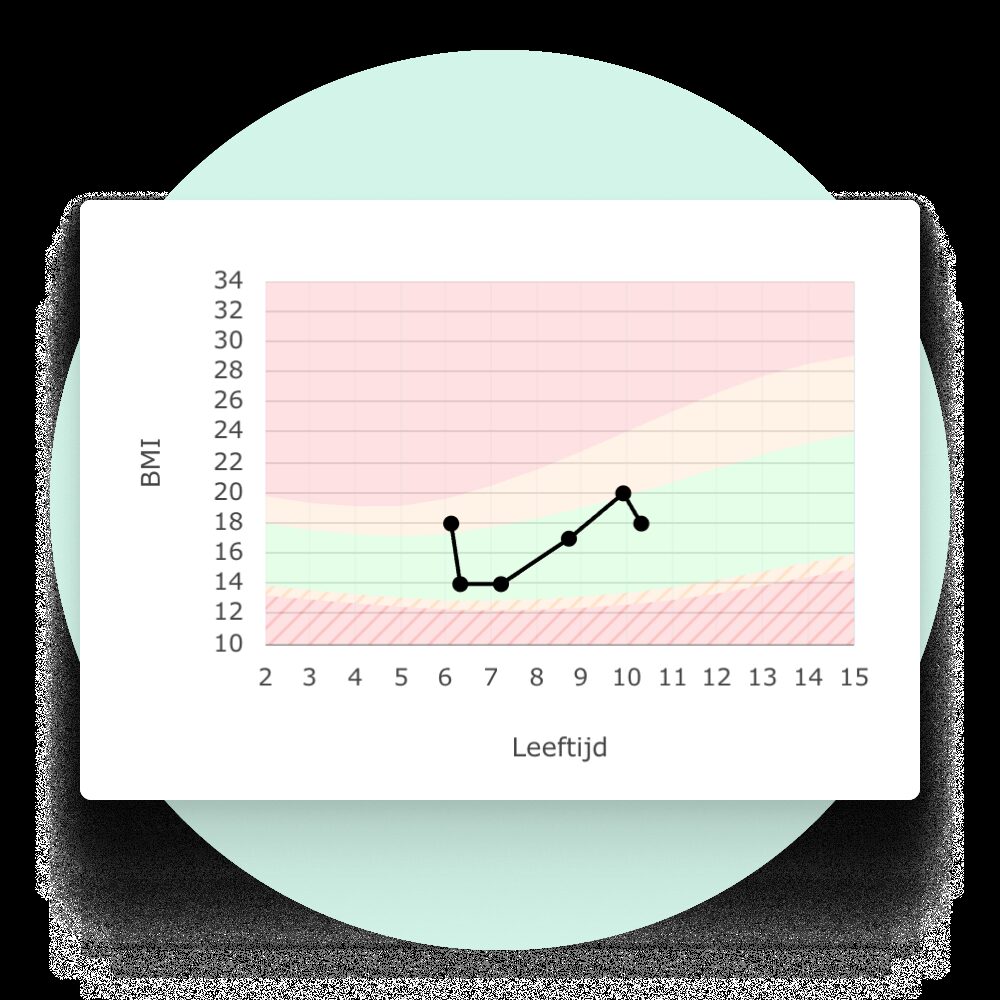
Children who score low on gross motor skills often also score lower on sports and physical activity (they move less, because moving is harder for them). There is also a frequent link with movement anxiety: children who are motorically insecure are more likely to develop fear in physical situations. Combined with biometric data, you can also see whether there is a relationship between motor delays and overweight.
Will you join us?
Together we give every child the start they deserve
Try it yourself
Create a free trial account and discover what Stimuliz can mean for you. You'll be up and running within minutes and see immediately how it works.
Let's talk
Do you have a question or want to know more? Or would you like to talk through your situation? We are happy to think along with you.

Tom Haarings
"Finally a tool I can use in a single lesson that immediately shows me where to focus. That gives me back time I can spend with the children."
~ PE teacher